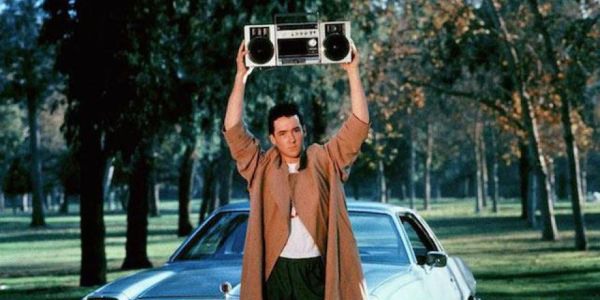
I’m a sucker for a good romantic comedy. Hell, I’m a sucker for the bad ones too! There’s just something about a love story unfolding before your eyes with some requisite laughs along the way, you know? I grew up on movies like When Harry Met Sally and Say Anything. They’re really good movies! But through no fault of their own, romantic comedies rarely depict true romance with any kind of accuracy. They’re just movies, fantasies, if you will but when you grow up watching these fantasies they can have an influence toward the way you think. Let’s face it, for many of us, our first idea of how to navigate love and relationships is formed from watching these movies.
Oscar Wilde once said, “Life imitates Art far more than Art imitates Life”. Aristotle be damned, Wilde was right. Love is abstract. Without first experiencing it one’s first impression of it might be influenced by the music they listen, the books they read, or the movies they watch. Are we born with a fully formed and healthy concept of love or do we learn it ourselves through our own interpretation of all its expressions? I prefer the former but that’s wishful thinking. We’re human after all. We live to be influenced. This says more about how we consume the art than it does about those creating it. Do the artists, in this case the filmmakers, bear some responsibility? Of course they do but we must consume and interpret responsibly as well. This is difficult during the more formative times of our lives and what leads me to these thoughts as I have them.
About a year ago there was this story that went viral about a guy that got dumped by his girlfriend. He bought a piano, stationed himself in a public park, and decided he would play this piano until she took him back. The first image that came to mind for me was that of Lloyd Dobler standing outside his ex-girlfriend’s bedroom window, boombox held over his head, blasting Peter Gabriel’s In Your Eyes. Both of these are forms of emotional blackmail, attempts to force someone into loving them again. Yet, Cameron Crowe shouldn’t have to apologize for including that scene in his movie. Yes, it is demonstrative of stalker-like behavior and it is clear that grandiose gestures such as this have influenced people in real life to engage in similar behavior, but Crowe at least provided context. First of all, Lloyd Dobler is a teenager and as such his decision making abilities have yet to fully form. His girlfriend, Diane, is basically forced to end the relationship at the insistence of her father. The boombox scene happens but what most of us seem to forget is that all this other stuff happens in between that scene and the rekindling of their relationship. Looking back at the boombox scene through a modern lens, we shouldn’t encourage such expressions of love but at the same time we do need to consider that it is exactly the kind of stunt that a teenager who is likely still trying to develop a healthy conception of love would pull. The aforementioned “piano man” lacks such context, though. He was 34 years old and an asshole, which is probably why his girlfriend broke up with him. All “piano man” did was put himself on display because that’s all he cares about. The guy was a self-centered creep, Lloyd was still a child. Lloyd isn’t the problem so much as the real life people that try to emulate him. We shouldn’t condone the boombox scene but enough context exists so that we might try to understand and process it.
I sit here thinking about which one of these “romcom” protagonists I feel a personal kinship towards. Yep, it’s another character played by John Cusack, because of course it is. In High Fidelity, Cusack plays Rob Gordon: record store owner, music junkie, everyman. He also doesn’t understand women at all and it’s entirely his own doing! Every time something goes sour he has an existential crisis! An important sub-plot of the film involves Rob looking up old girlfriends in search of some kind of post-mortem of their respective relationships with him. I’ve done this before, sans the encouragement Ron received from Bruce Springsteen. I start to wonder what it all means. Rob was definitely a bigger asshole than I am, I feel comfortable saying it’s not even close. By the end of the film it becomes clear to Rob that he never tried to understand the women in his life, least of all his girlfriend Laura. Ultimately, he figures it all out and it does seem as though he is truly a more complete and better person. I learned a lot from Rob Gordon, but it was mostly on how not to behave. Being able to relate to such an asshole didn’t mean I should try to be more like him. I would have missed the point completely. This is what we do when we consume art. We get it or we don’t and the trouble lies in how much we our behavior ends up being influenced.
Manic Pixie Dream Girls aren’t real. Women don’t need saving. Over the top expressions of love are creepy. A makeover isn’t going to fix everything. Duckie didn’t deserve to get the girl, he was an asshole. “Deserve’s got nothing to do with it.” You are owed nothing. Movies aren’t real and what works in the movies rarely does in real life.
When we watch these movies, whether they be romantic comedies or any other genre, we miss the fundamental point. We’re just supposed to sit back and enjoy the ride we’re being taken on. We can sit in front of a screen and do this but as audience to our own lives we fail over and over again. We view ourselves as writers and directors but we’re not. We are our own audience, an audience with a modicum of control over how things play out but our power is not absolute. If we could write our own lives, it wouldn’t be real, it would just be another fantasy. When we develop our emotions and behaviors via the art we consume, we give in to fantasy yet again. We have to stop looking for the dare to be great situations…they’re never as great as you’d like to think. We don’t get to write our own personal romantic comedies but we do get to be audience to them. We get to learn from our own experiences. Sit back and enjoy it. That’s all we’re supposed to do.
 A Winner Is Me